



Blog

Most people understand the need to wear sunscreen in the height of the summer, but we find far less awareness of the need to continue to wear protection at other times of the year. Even here in Los Angeles, where we are pretty much guaranteed copious sunlight throughout the entire year, there’s a widespread belief that you only really need protection when the sun is burning hot.

Nothing could be further from the truth — damage from the sun’s UV rays is cumulative. Although exposure to high-intensity sunlight is incredibly dangerous, so is continued exposure to the lower intensity sunlight that we encounter throughout the year. Just because your skin may not be burning does not mean that you’re not in the process of damaging it. You can easily damage your skin without necessarily feeling anything untoward happening.

Negative Effects of Sunlight

Although sunlight has many positive benefits on the body, including boosting serotonin and Vitamin D levels and regulating our sleep patterns, sunlight can actually be responsible for a wide range of negative effects. 

Excess sun exposure can lead to sunburn, heat rash, premature wrinkles and aging, dehydration, heat exhaustion, and heatstroke. It can also lead to the development of several different types of skin cancer.

Sunlight is composed of a range of different light frequencies, most of which we see, but several of which we don’t. The ultra-violet (UV) components of sunlight are primarily responsible for damaging the skin. There are two categories of UV rays – longer wavelength UVA rays penetrate further into the skin and are primarily responsible for skin aging; lower wavelength UVB rays don’t penetrate as deeply and are the leading cause of skin burning. Exposure to either UVA or UVB rays can lead to skin cancers. 

Seasonal Effects

The intensity of UV light that you’re exposed to depends on several factors, including the season, the time of day, the amount of cloud cover, and your latitude, altitude, and even the ozone level. The EPA even publishes a UV index map of the US, along with a four-day forecast. UVB rays are most intense in the summer and spring; UVA rays are present in all seasons. In addition, UVB rays are present even in cloudy conditions; they also penetrate most window glass types.

Effective Protection

We recommend regular application of sunscreen, both as a precaution before exposing yourself to direct bright sunlight, but also as a part of your regular daily routine, year-round. It’s worth stressing that the need to use an effective sunscreen is not limited to when you’re lying on a beach, but is needed when you go about your everyday life, regardless of the temperature, the clothes that you’re wearing, and even if it’s a cloudy day.

Your clothes obviously provide considerable protection. But in addition to protecting your face, don’t forget to apply sunscreen to your neck, shoulders, forearms, hands, legs, feet, and any other body parts that might be exposed. Some people even tan through their clothes, demonstrating that sunlight can penetrate through light clothing.

Sunscreen Products

Sunscreen products have come a long way from the heavy, greasy formulations used to be the only option. You can choose from a wide range of effective sunscreens that incorporate moisturizers, are easy to apply, and are absorbed by the skin. Although a sunscreen’s SPF rating provides a good indication of its effectiveness, you shouldn’t necessarily use this rating as the only way to select a product. A lower-SPF rated product that you’re comfortable using routinely will do you more good than a high-SPF rated product that you only use rarely.

Your Laser Skin Care

Your Laser Skin Care has experience in a wide range of non-invasive cosmetic procedures, including several that can be used to help rejuvenate your skin and help to mitigate the negative effects of too much exposure to sunlight. We can advise the most effective (and cost-effective) ways to help you achieve your cosmetic goals. Our team is also able to evaluate skin damage accurately. Call us at (323) 525-1516 to schedule a free consultation or visit us online for more information.
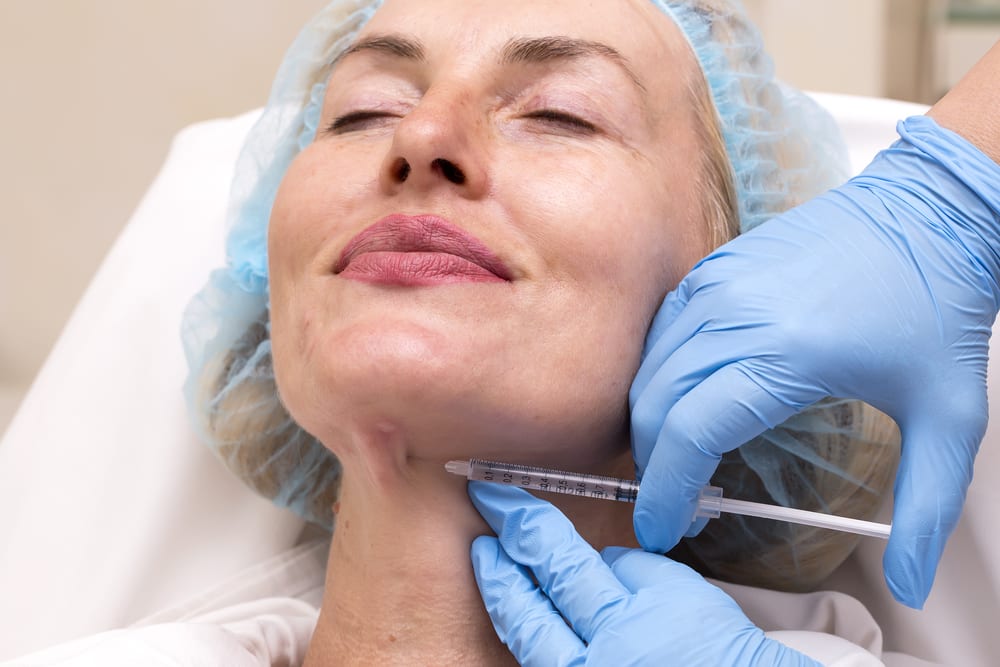
When looking for ways to reduce or eliminate fine lines or wrinkles, you’ll find that there are two commonly-used ways to address these problems: dermal fillers or Botox. Sculptra is a widely-used injectable product that “fills in” facial lines, while Botox is an injectable neurotoxin that can relax the facial muscles that are causing the lines. Unsurprisingly both strategies have their strengths and weaknesses; today, we’re going to explore where exactly you might consider using each technique. But bear in mind that there’s absolutely no reason why you can’t use both of these non-invasive techniques concurrently, thereby getting the “best of both worlds.”

Common Characteristics 

Both products are injected into the skin, neither product requires any significant downtime or recovery period, although you may experience minimal bruising or swelling after treatment. Both products may require more than one treatment to achieve the best results; neither treatment gives permanent benefits.

Advantages of Sculptra and Other Fillers

Injectable dermal fillers are a quick, affordable, and proven to reduce or even eliminate fine lines and wrinkles. They use PLLA or hyaluronic acid, combined with other ingredients, to add volume to the skin, thereby filling in the lines and eliminating wrinkles. They also stimulate further collagen production by the body, extending their uses beyond the point where the body absorbs the filler material. In particular, Sculptra is formulated to maximize the production of collagen and yield benefits that last far longer than other dermal fillers – up to two years.

Dermal fillers are available in a wide variety of different formulations, providing solutions that are effective in different situations and for various skin textures. For example, fillers can also help mitigate the loss of facial volume and provide a degree of lift to sagging or loose skin.

Fillers do have some effect straight away after treatment. Still, they also create changes that only start to develop in the weeks following each procedure, and continue to develop over the course of several months. While this delay can be frustrating, it does have the advantage that the full benefits become apparent in a more gradual, more natural-looking manner.

Advantages of Botox

Botox injections work by relaxing selected facial muscles, thereby eliminating the lines or wrinkles that contraction of the muscles can cause. The effects of a Botox injection become apparent several days to two weeks after the treatment. As Botox works by deactivating muscles, it primarily affects dynamic lines and wrinkles, meaning those lines whose appearance is directly tied to transient facial expressions. If a line or wrinkle is always present, regardless of whether you’re smiling, frowning, or showing some other emotion, then it won’t be entirely eliminated by Botox.

Botox does not compensate for lost facial volume beneath the skin. Botox results can be expected to last anywhere from three to six months.

Obtaining the Best Results

The results that can be obtained by using Sculptra and/or Botox are heavily dependent on the skill of whoever performs the procedure. Both techniques are capable of creating natural or very unnatural-looking outcomes. For the best and safest results, you should carefully research the qualifications of each practitioner you consider and ensure that the person you decide on is medically qualified and has the training and experience needed to achieve the best possible outcome.

Fortunately, you don’t have to choose between Sculptra and Botox. Both techniques can be used in combination, and in the hands of a skillful practitioner, you can gain the benefits of using the best method or methods according to your specific needs.

Your Laser Skin Care

Your Laser Skin Care is medically qualified and very experienced – we can advise on the best way to address your particular situation, whether that means using Sculptra, Botox, or a combination of both. We have extensive experience applying both techniques and a host of other non-invasive cosmetic procedures. Call us at (323) 525-1516 to schedule a free consultation or visit us online for more information.

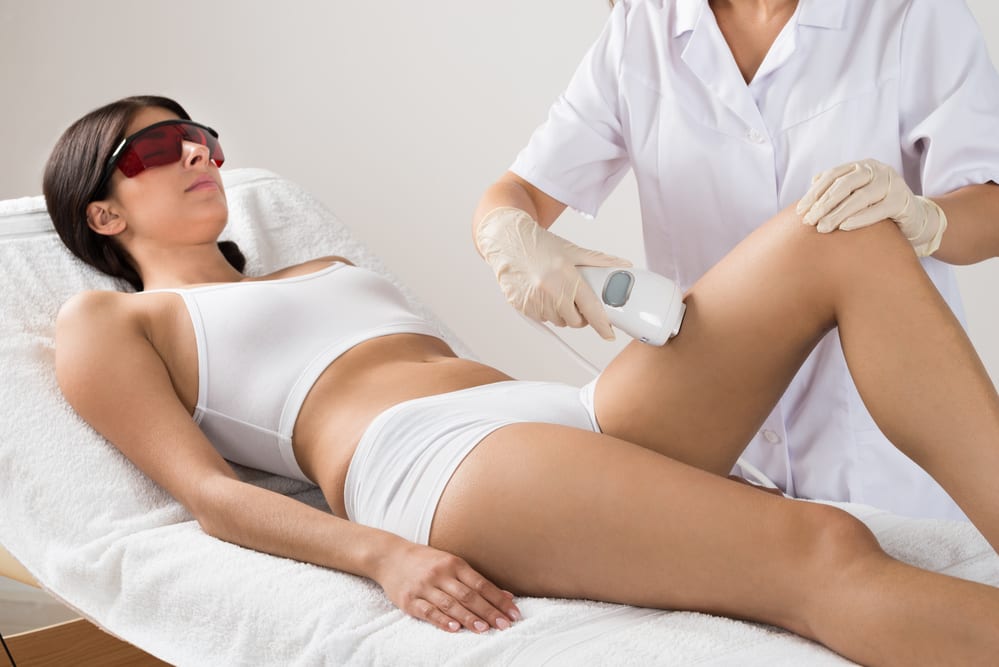
Woman undergoing laser hair removal

Laser hair removal uses finely-tuned laser light pulses to damage (and eventually destroy) the hair “root” or follicle. 

Professional practitioners’ actual apparatus varies but typically uses a YAG laser to create and focus laser light pulses – a similar technique, known as IPL (intense Pulsed Light), is also available. However, it is somewhat less effective on thick, coarse hair.

One characteristic shared by laser and IPL hair removal is that each treatment can only affect a percentage of your hair follicles – this is because all hair follicles go through a life cycle, with periods of growth interspersed with periods of rest. The laser or IPL pulses can only effectively target individual hair follicles that are actively growing, typically around 20% to 25% of the total at any given moment.

Professional Hair Removal Process

Professional laser hair removal equipment allows the practitioner to adjust the size of each light pulse, as well as the depth to which each is directed. This allows the procedure to be tailored to each patient’s individual requirements. In some cases, the light pulses can also be adjusted to maximize effectiveness according to each patient’s hair and skin color.

But aside from the technical details, an experienced practitioner will be able to draw from their training and personal experience to achieve the best results in the least time, while also ensuring that patient discomfort is reduced to a minimum, and while ensuring that the procedure is conducted in a safe and effective manner. This last point is far from the least important – a hair removal laser in untrained or inexperienced hands can not only be ineffective but is also capable of possibly causing burns and scars.

A professional will be able to determine the most effective schedule for repeated sessions — remember that each session can only target around 25% of hair follicles, so multiple sessions will always be required. 

Home “DIY” Hair Removal Process

Several “do it yourself” devices are now available, marketed as a way to achieve similar results from the convenience of your own home. Although this might seem like an attractive way to remove unwanted hair without having to leave your home, there are several factors that you need to be aware of.

What Exactly Are You Buying?

Firstly, most (if not all) at-home devices are not actually lasers — they instead use less effective pulsed light. Unsurprisingly they are also significantly less powerful than professional devices used by hair removal practitioners. This is good because it reduces the chance of causing injury, but it also means that these devices are way less effective at actually removing hair. The larger the area you want to treat, the more the drawbacks of at-home under-powered devices will become apparent.

At-home devices also often have limited lifetimes. Their light-producing elements may lose effectiveness and need replacing more often than the manufacturer claims.

How Can I Tailor Treatment to my Needs?

One of the most significant problems is how best to tailor treatment to your particular combination of skin and hair color, particularly if you don’t have the “optimum” combination of pale skin and dark hair. Basically you don’t get the ability to tune the treatment when using cheap at-home devices, which means that there’s a significant chance that you won’t be able to achieve acceptable results safely. Some complexions (particularly dark-skinned) are more at risk for burning or scaring when exposed to excess light energy.

Other Safety Considerations

If you decide to proceed with the DIY approach, some more critical advice – read all instructions carefully. You MUST avoid using a laser or IPL light pulses near the eyes, near the genitals, and around any unusual pigmentation areas, including tattoos and moles.

You also won’t have access to the full range of pain-control techniques that are available to professional practitioners. Don’t underestimate how painful an unprofessional hair removal session can be! 

Finally, keep in mind that you generally get what you pay for as in so many areas. Don’t fall into the trap of focusing on short-term savings while neglecting to factor in the time and cost savings from using a professional to control unwanted hair most safely and cost-effectively.

Your Laser Skin Care

Your Laser Skin Care is medically qualified and experienced. We can advise on the best way to achieve permanent or long-term hair removal, tailored to your specific requirements. We have extensive experience with laser and IPL hair removal and a host of other non-invasive cosmetic procedures. Call us at (323) 525-1516 to schedule a free consultation or visit us online for more information.

Continuing our recent focus on varicose veins, we’re moving to try to dispel several of the more commonly encountered varicose vein myths. Given the potential long-term problems associated with untreated varicose veins, these are well worth tackling.

Varicose Veins are Just a Cosmetic Problem

Varicose veins are, without question, a cosmetic problem in almost every case. However, given the range of possible health problems that can be responsible for causing the condition, and the possible health effects that can result if varicose veins are allowed to develop without treatment, they absolutely also have the potential to cause significant long-term health problems.

As to the worst-case health problems that can be caused by varicose veins – deep vein thrombosis or pulmonary embolisms are two that should definitely get your attention.

Early diagnosis and treatment can not only help you avoid developing the cosmetic problem that varicose veins can become, but can also help you minimize or even avoid associated long-term health problems

Varicose Veins are Primarily a Problem for Elderly Women

Elderly women are the group most likely to develop varicose veins, but they’re certainly not the only group that’s susceptible. Around a third of adults will eventually develop varicose veins in some form, and men are certainly also vulnerable. 

Furthermore, although age is generally a significant factor, varicose veins are not confined to the elderly. They can develop at far younger ages, and can certainly start to become a problem in your 20’s, 30’s, or 40’s.

Crossing Legs Causes Varicose Veins

Varicose veins can be caused (or exacerbated) by several factors. People with sedentary jobs are vulnerable, as are those who spend extended periods standing. Family history can be a factor, as well as carrying excess weight. The common factor is their tendency to disrupt normal blood circulation and cause blood to pool in the legs. 

Although it might seem that crossing one’s legs could cause blood circulation problems, this is typically not the case. Still, spending long periods with your legs crossed could lead to back pain, and even spending too much time sitting could eventually contribute to worsening circulation. Moderation in all things!

You Only Need to Worry about Visible Varicose Veins

Varicose veins are more likely to develop close to the surface. It’s certainly true that varicose veins in this region are more likely to be visible, and thus regarded as cosmetic problems. But varicose veins can also develop deeper beneath the skin and are less likely to be noticed, especially if you’re overweight. If you experience unusual pain in the legs, especially if this continues, you should definitely be evaluated by a doctor.

The Only Effective Treatment is Surgery

This used to be the case, but we now have access to both minimally and non-invasive techniques that can address many of the cosmetic aspects of varicose veins, including Sclerotherapy and laser vein therapy. Your doctor should be consulted as to the factors that may have been responsible for you developing varicose veins – it’s possible that you might require more treatment than simply resolving the visible component of varicose veins. 

Varicose Veins will Always Return after Treatment.

It’s not possible to give a blanket answer to this question, although it’s certainly not inevitable that varicose veins will return after treatment. Your doctor can advise you on lifestyle changes that will reduce the chances of their recurrence.

Your Laser Skin Care

Your Laser Skin Care is medically qualified and experienced – we can provide you with a full range of services, including full diagnosis of the cause of your varicose veins, advice on the best ways to treat the condition, and pointers on how to avoid them returning after treatment. We have extensive experience providing both laser vein therapy and Sclerotherapy treatments, as well as a host of other non-invasive cosmetic procedures. Call us at (323) 525-1516 to schedule a free consultation or visit us online for more information.

Woman's legs

Varicose veins are visible symptoms of poorly functioning valves that allow blood to circulate in the “wrong” direction. The immediate result is increased pressure on blood vessels walls, leading to damage and weakening of the blood vessels, resulting in the twisty and enlarged veins that characterize the condition.

Common Causes 

Varicose veins can be caused by a variety of different medical conditions that can affect blood circulation, including genetic predisposition in some families, obesity, pregnancy, extended periods of sitting or standing, and even smoking.

Minor Complications

Poor blood circulation can increase the pressure on the skin, often resulting in local bleeding, and in some cases, the formation of sores. These are known as venous or varicose ulcers and typically form on the sides of the lower leg. Sores in this area are often slow to heal and can also become infected if left untreated.

Potentially Serious Complications

Although severe complications from varicose veins are rare, they can lead to some potentially far more unpleasant problems. 

The first complication is the development of blood clots in veins close to the skin surface. The chance of developing blood clots significantly increases when blood circulation is disrupted, and blood starts to pool. 

If blood clots are allowed to develop in deep veins, typically in the thighs or lower legs, the result can be deep vein thrombosis. This can result in leg pain or swelling, but may not be associated with any symptoms. It’s a far more serious condition, however.

Ultimately, if left untreated, blood clots can become dislodged and travel through the body. If they migrate to the lungs, they can result in blocked arteries, known as pulmonary embolism. This is a severe condition that can result in chest pain and shortness of breath.

Treatment

The above should have convinced you to take the development of varicose veins seriously. The good news is that treatments are available to help address varicose veins’ development, even in their early stages. You should start by consulting a qualified doctor to establish if your varicose veins are merely cosmetic, or if they’re the result of a more serious condition.

When no serious underlying medical conditions exist, there are non-invasive or minimally-invasive treatment options, including Sclerotherapy and Laser Vein Therapy. Early treatment will also greatly reduce your chances of developing more serious complications afterward.

Your Laser Skin Care

Your Laser Skin Care is medically qualified and experienced – we can provide you with a full range of services, including a complete diagnosis of your varicose veins’ cause and advice on the best ways to treat the condition. We have extensive experience providing both Laser Vein Therapy and Sclerotherapy treatments and a host of other non-invasive cosmetic procedures. Call us at (323) 525-1516 to schedule a free consultation or visit us online for more information.

Collagen is found in the body’s various types of connective tissue, including skin, cartilage, tendons, and ligaments. Collagen forms dense fibers that provide support, strength, and cushioning – the collagen within our skin is mainly responsible for the elasticity, resiliency, smoothness, and volume of our skin. Collagen production starts to slow down as we age, starting in our early 30’s. As collagen levels decrease, we can begin to develop fine lines and wrinkles; as levels decrease further, we may start to see loose, sagging, and even shriveled looking skin. 

Natural vs Artificial Collagen

Unsurprisingly many cosmetic procedures attempt to rejuvenate the skin’s appearance by trying to compensate for lost collagen. But there’s a difference between the collagen that’s naturally produced by your body, and externally applied collagen that’s somehow added to the body. It’s difficult for the body to absorb applied collagen effectively, and it’s also not possible to replace all the body’s missing collagen this way. Naturally produced collagen is by far the most effective substance for maintaining the skin’s firmness and resiliency

Stimulating Natural Collagen Production

Having established that simply applying collagen to the skin using creams (or even injections) is less effective than persuading the body to create more collagen naturally, the question becomes what’s the most effective way to reverse the natural reduction in collagen production as we age?

Injectable fillers bypass one problem – they are directly injected into the optimum skin layer and don’t need to first be absorbed by the outer skin layers. Injectable fillers typically contain primarily hyaluronic acid, which provides immediate benefits by increasing the skin’s retention of moisture, but more significantly has recently been proven to stimulate the body’s natural collagen production over significant periods. 

Benefits of Hyaluronic Acid Dermal Fillers

The use of hyaluronic acid thereby provides a double-benefit – injection of the filler will resolve several age-related cosmetic issues immediately, and the long-term stimulation of collagen production allows benefits to be seen even after the body eventually starts to absorb the filler over time.

Your Laser Skin Care

Your Laser Skin Care can provide you with advice on the best ways to use and combine different dermal fillers, giving you the most effective and cost-effective way to achieve your cosmetic goals, tailored to your specific needs. We have extensive experience providing dermal fillers, as well as a host of other non-invasive cosmetic procedures. Call us at (323) 525-1516 to schedule a free consultation, or visit us online for more information.

Injectable dermal fillers are relatively well-known as effective ways to address lost facial volume and lines or wrinkles. Laser skin tightening is a more recent technique that can be used in several situations to achieve similar results. This blog post discusses the circumstances when each technique is recommended. 

Which situations are best handled by laser skin tightening?

Laser skin tightening is an effective way to reduce or remove fine lines and wrinkles and tighten sagging skin. The non-invasive procedure uses focused laser light pulses to gently heat and stimulate moisture inside the collagen fibers that are primarily responsible for the elasticity and resiliency of our skin – the procedure results in a realignment of the collagen fibers, tightening the skin, as well as stimulating the body’s continued natural production of collagen long after the actual procedure. The procedure is relatively painless, low-risk, and typically does not result in any downtime after treatment.

Which situations are best handled by dermal fillers?

While laser skin tightening stimulates the body’s natural collagen, injectable dermal fillers primarily replace lost collagen and hyaluronic acid in the skin. This can help restore the skin’s resiliency and plumpness and help reduce or eliminate lines and wrinkles, as well as compensate for lost volume caused by loss of subcutaneous fat. They are more effective at rejuvenating the appearance of parts of the face that have become hollow, for example, beneath the eyes or the lower cheeks. They are also especially effective at smoothing out fine lines around the eyes or lips and reducing skin folds between the sides of the nose and the mouth.

When used to tighten loose skin, dermal fillers that compensate for lost volume can give a more natural-looking result than simple laser skin tightening can – this is because merely tightening loose skin without compensating for lost volume beneath can result in an unnatural stretched appearance to the skin’s surface.

How to choose between different dermal fillers?

There are a considerable number of different dermal filler products available – we’ve covered the first available options in other blog posts. Your practitioner should be ready to help you choose the best product (or combination of products) to help address your particular situation. Different products are available with a range of different characteristics, suitable for treating problems ranging from fine lines to moderate wrinkles, all the way to deep lines and skin folds. Specialized filters are available to help address more extensive areas of lost volume and provide “lift” to areas that have suffered from sagging over time. Some fillers are also designed to stimulate collagen production over extended periods, much like laser skin tightening.

Dermal fillers share one other useful characteristic – their effect can be reversed, fully or partially, if needed.

Your Laser Skin Care

Your primary concern should be to find a practitioner who can not only suggest ways to solve your cosmetic concerns effectively, but also ensure that changes to your appearance remain natural-looking. The best way to achieve this is to consult with a medically-trained and certified practitioner with extensive experience. Your Laser Skin Care has many years of experience in assisting our clients in achieving their cosmetic goals in the most effective way – call us at (323) 525-1516 to schedule a free consultation, or visit us online for more information.

1 20 21 22 23 24 84
Schedule Your Laser Skin Care Appointment Today! Make An Appointmentcircle-arrow-icon

Meet Dr. Fedonenko

Dr. Eleonora Fedonenko is a member of the American College of Physicians and is Board Certified in Internal Medicine.

She completed her Residency at the University of Virginia School of Medicine in 1998 and has since specialized in Cosmetic Dermatology.

She obtained additional training in aesthetic medicine procedures soon thereafter, and the results of her extensive training and experience show in each and every patient’s face. She’s a doctor that can truly been trusted with your skin care and anti-aging needs.

Our Specials

  • Botox $11 per unit (20 units minimum)*
  • Juvederm $750 per syringe*
  • 10% OFF Latisse
  • * New clients only

Our location

6221 Wilshire Boulevard
Suite 102, Los Angeles, California 90048
Schedule Your Laser Skin Care Appointment Today! Make An Appointment